본인에게 중간지대로서의 여정은 도착을 보증하는 여정이며 여정 가운에 느껴지는 불안 또한 도착이라는 긍정적 기대로 환원될 수 있는 시간이다. ‘중간지대’라는 말은 본인의 오랜 이동 생활을 통해 체험한 여러 가지 물리적, 상징적, 철학적 표현 안에서 그 이름을 명명하게 된 개념이다. 중간지대는 어느 곳에도 속하지 않거나 그 모든 곳에 속할 수도 있는 곳이다. 그곳은 이곳과 저곳을 연결하는 교량(bridge, 橋梁) 위의 삶이기도 하다. 즉 비장소의 삶이다. 비장소의 일상은 끊임없이 이동의 여정, 즉 교량 위를 지나는 가운데 있다. 그 여정은 걸으며, 달리며, 버스를 타고, 기차를 탈 때, 그리고 비행기를 탈 때 등 다양한 순간에 경험된다.
빌렘 플루서는 디지털에 의한 삶과 실제적인 삶을 이분화 하지 않는다. 그에게 있어 디지털 매개에 의해 가속화된 가상 세계와 현실은 다르지 않으며 비츠의 촘촘함의 정도가 문제시될 뿐이다. 본인 또한 기술을 통해 가속화된 이동매체는 지각할 수 없는 특수한 지대를 감각하게 한다고 해석한다. 그 특수한 지대가 바로 중간지대이다. 중간지대는 과거, 현재, 미래가 중첩적으로 경험되는 독특한 공간이다. 대표적으로 버스, 기차, 비행기 등의 이동수단을 탈 때 우리는 중간지대적 비장소를 경험할 수 있다.
이동매체 안에서 지각할 수 있는 중간지대는 중간자가 살아가는 지대이다. 본인의 작품에서 등장하는 열차 안의 장소성은 은유적 중간지대가 된다. 열차에서의 경험은 중간자의 궁극적 도착지를 앞당겨와 현실의 이미지 위에 겹쳐 상상하는 경험이다.
본인은 중간자의 위치를 체험할 수 있는 매체로서 운송수단을 제시하고 있다. 버스나 열차 안에서의 경험은 비장소적인 중간지대를 경험하게 해준다. 어두운 밤 도로를 달리는 버스나 열차라는 매체를 타고 있는 주체는 그 공간 안에 존재하고 있다는 사실을 잊어버리게 된다. 내부는 어둡고 바깥의 불빛만 환하게 다가오기 때문이다. 즉 버스나 열차라는 미디어를 지워버리는 비매개적 경험이 시작된다. 여행자는 아주 감상적인 상태로 접어들게 되고 열차가 빠른 속도로 밤풍경을 스치듯 달려갈 때 그 감정은 고조된다. 열차가 터널 안으로 빨려 들어간 후에는 마치 가상의 공간에 있는 착각을 갖게 된다. 터널에 부착된 조명들이 뿜어내는 빛은 열차의 빠른 속도로 인해 산만하게 번진 흔적으로 지각된다. 이는 곧 사이버스페이스를 연상하게 한다.
Certainly! Here’s a clear, natural English translation that flows smoothly:
For me, the journey through the “middle zone” is one that promises arrival; even the anxiety felt along the way can be transformed into positive anticipation of reaching the destination. The term “middle zone” is a concept I have named through years of migration and movement, encompassing various physical, symbolic, and philosophical experiences. The middle zone is a space that belongs nowhere and everywhere—a life lived on a bridge, connecting here and there. In essence, it is the life of the non-place, defined by constant movement. This journey is experienced in many moments: walking, running, riding a bus, taking a train, or flying in an airplane.
Vilém Flusser does not separate digital life from real life. For him, the difference between the accelerated virtual world and reality is only a matter of the density of information. Similarly, I interpret technology-driven mobility as revealing a unique, perceptual zone—the middle zone. This is a space where past, present, and future overlap. We most clearly experience this middle-zone non-place when traveling by bus, train, or airplane.
The middle zone perceived within modes of transport is the realm where the intermediary lives. In my work, the interior of a train becomes a metaphorical middle zone, where the traveler’s anticipation of arrival overlays the present reality with imagination.
I present modes of transportation as media through which one can experience the position of the intermediary. Riding a bus or train at night, one can forget their presence within the space—the interior is dark, and only the lights outside are visible. This creates an almost unmediated experience, where the medium of the bus or train seems to disappear. The traveler enters a deeply reflective state, and as the train speeds through the night, this feeling intensifies. When the train is drawn into a tunnel, it can feel as if one has entered a virtual space; the lights inside the tunnel blur and scatter due to the train’s speed, evoking the sensation of cyberspace.
‘재매개’를 통한 초월적 공간 경험에 대해 묘사한 재론 래니어(Jaron Lanie, 최초의 상용 가상현실 시스템의 개발자)의 말을 인용해 가상현실에서의 지각 범위에 대해 설명하자면 우리는 “공룡의 세계를 방문할 수도 있고 티라노사우르스가 될 수도 있다. DNA를 볼 수 있을 뿐만 아니라 하나의 분자가 되는 경험을 할 수도 있다.” 래니어가 표현한 분자가 되는 경험은 영화처럼 물리적으로 신체를 줄어들게 하는 방식을 이야기하는 것이 아니다. 이는 재매개된 이미지에 둘러싸여진 상태를 설명해주고 있다.
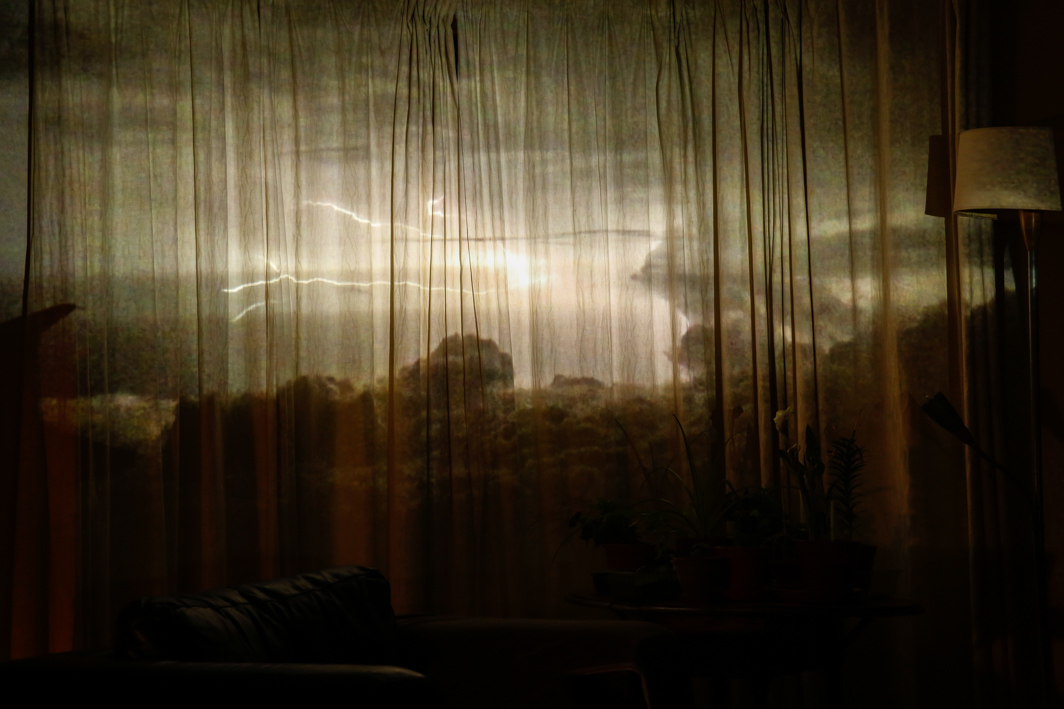
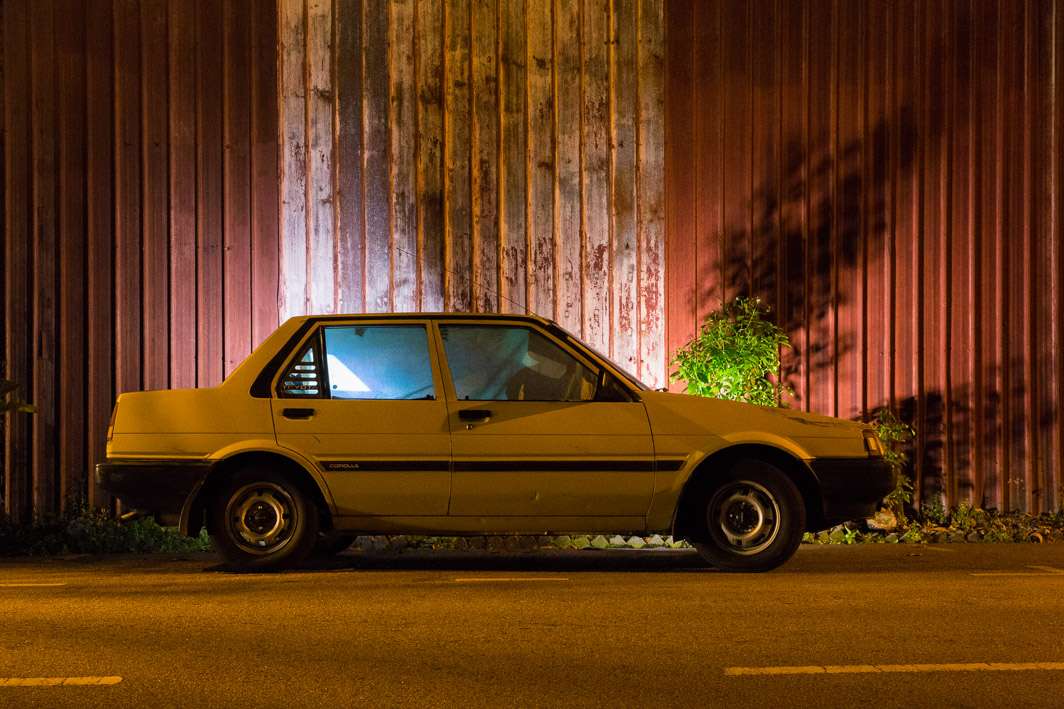
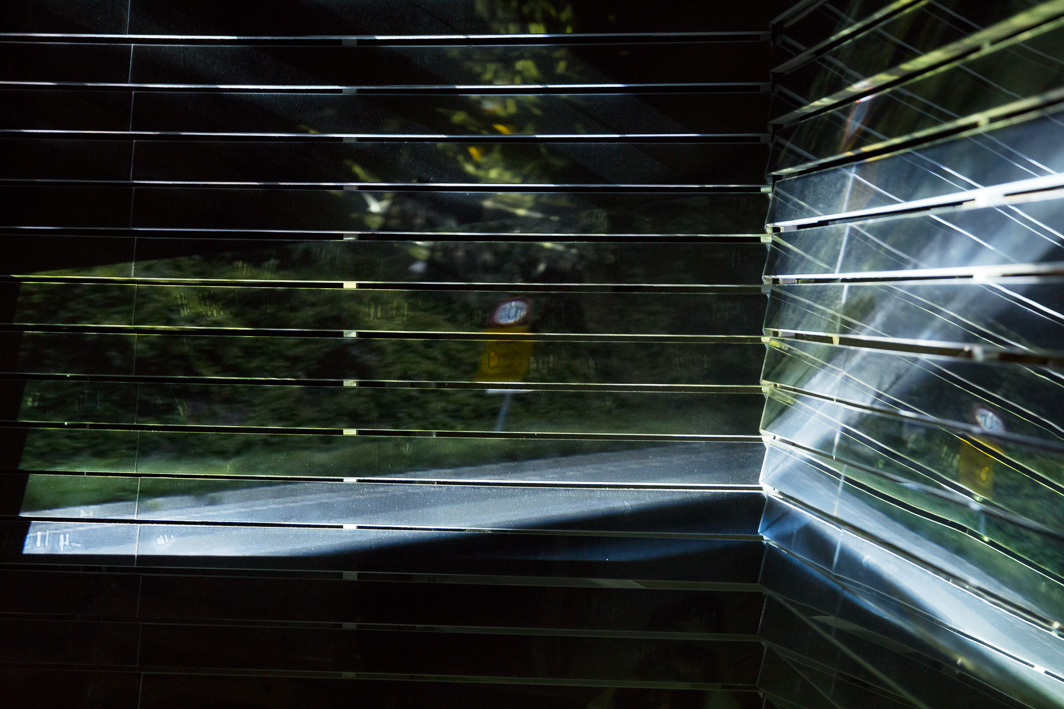
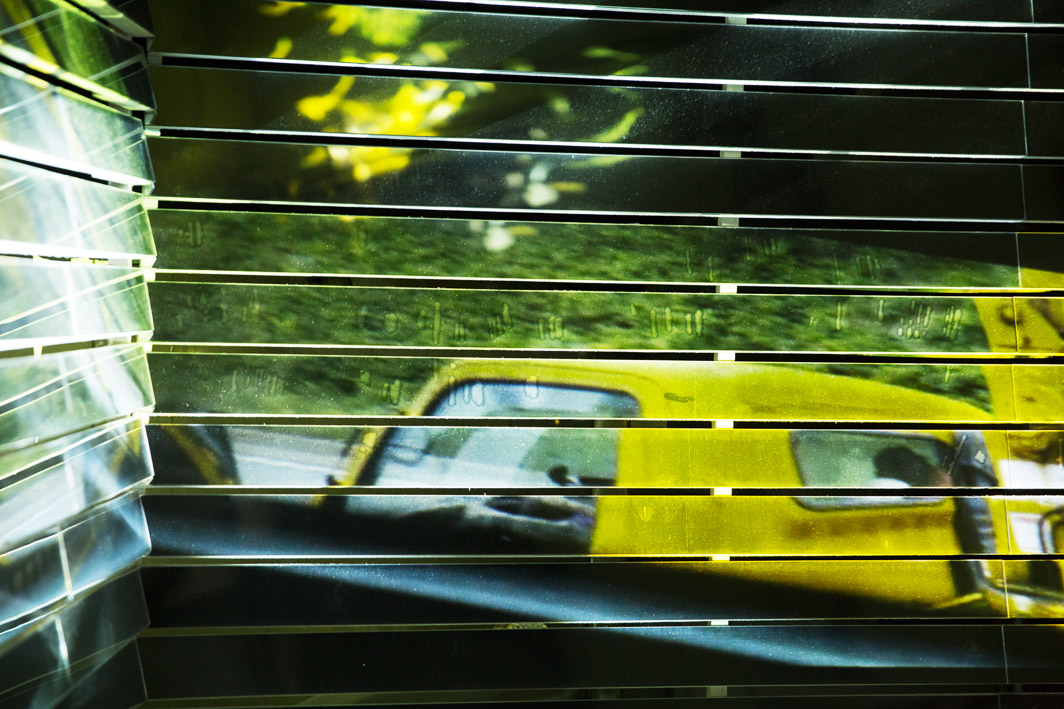
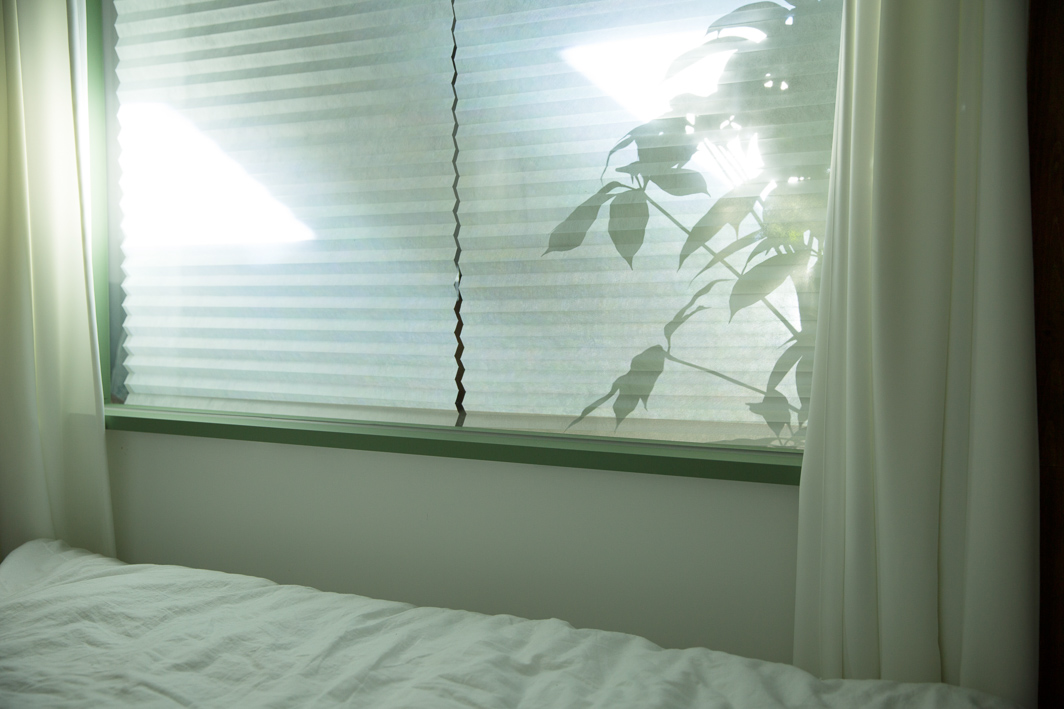
이와 관련하여 본인은 지극히 평범한 현대인의 일상 속에서 미디어 침투에 의해 생겨난 아우라를 발견했다. 본인은 개인의 이동 경험에서 기록한 이동매체 창밖의 이미지들을 채집하여 이를 일상의 풍경에 겹쳐 보이기를 시도했다. 예를 들어 비행기에서 보았던 천둥번개와 같은 생경한 풍경을 안락한 거실의 커튼 위에 영사하여 포개고, 빠르게 달리는 고속열차 바깥 풍경을 오래된 자동차 창 위에 영사하여 교차된 이미지로 보여지게 했다. 본인이 세계를 바라보고 해석하는 방식은 이런 상징적 재현 방식으로 연출되어 표현된다. 그리고 매체의 재매개적 관계는 입체적 지각, 즉 매체를 통해 경험되는 ‘매개된 아우라’를 경험하게 한다.
버스와 열차를 타고 출퇴근을 하는 현대인들에게 있어 이제 사이버스페이스로의 접속은 일상적이 되었다는 게 그 예이다. 현대인들은 컴퓨터 그래픽으로만 경험했던 사이버스페이스를 버스나 열차라는 이동매체 안에서 일상의 간헐적 사건으로 경험하고 있다. 이제 우리의 삶은 이동매체에 의해 옮겨 다니며 비장소에 머무는 삶이다. 본인은 이러한 삶을 비관적인 관점으로 바라보지 않는다. 오히려 본인의 작업은 우리의 삶이 매체를 통해 더 깊은 경험에 이를 수 있고 그렇게 접속할 수 있는 인터페이스가 곳곳에 존재한다는 것을 확인시켜주는 작업이다.
Quoting Jaron Lanier, the developer of the first commercial virtual reality system, we can describe the transcendental spatial experience enabled by “remediation.” Lanier explains the range of perception in virtual reality by saying, “We can visit the world of dinosaurs or even become a Tyrannosaurus. We can see DNA, and even experience being a single molecule.” The experience of “becoming a molecule” is not about physically shrinking, as in a film, but about being surrounded by remediated images.
In relation to this, I have discovered an aura created by the infiltration of media into the everyday life of modern people. I collect images seen through the windows of various modes of transport during my personal journeys and attempt to overlay them onto ordinary landscapes. For example, I might project the unfamiliar sight of lightning seen from an airplane onto the curtains of a cozy living room, or display the rapidly changing scenery outside a high-speed train on the window of an old car, creating intersecting images. My way of viewing and interpreting the world is expressed through this kind of symbolic representation. The relationship between media and remediation enables a multi-layered perception—what I call a “mediated aura” experienced through media.
For modern commuters on buses and trains, accessing cyberspace has become a part of daily life. What was once only experienced through computer graphics is now encountered as an everyday event within these moving spaces. Our lives are now lived in transit, constantly moving through non-places. I do not view this way of life pessimistically; rather, my work affirms that media can deepen our experience and that interfaces for such connections exist everywhere.